November 28, 2010

How Meeting a Stranger Online Could Make Your Life Better

Remember Chatroulette ? A New York Times article came out recently called Chatroulette Hatches Similar Web Services. The article goes in-depth into Chatroulette, the service that allows users to randomly video chat with strangers in the hopes of sparking up an interesting conversation and discusses a few new start-ups that have been spawned from the idea that you can generate meaningful relationships from randomizing technology.

Some of the most interesting ones?
  • Facelette - Allows users to randomly chat using the iPhone Facetime feature
  • Chatfe -Users start convos based on randoms questions
  • VChatter - eHarmony meets Chatroulette (sans optional nudity) AND matches users up based on their Facebook profiles
One that I just tried, Feedback Roulette actually allows users to randomly critique others' websites in exchange for getting their own critiqued. Novel idea? Maybe. Or maybe its just a really great spin on an old idea.

With all of the social media random meet-ups happening, companies are trying to find their own niches. Look at online TV viewing. There are already chat rooms, forums and tweet-ups. When Google TV hits the market, some interesting applications will most likely be bringing these same people with common interests into one social sphere to discuss what shows they are watching.

But unlike these preset meet-ups, I suspect that the -roulette era may find users engaging in more meaningful and quality conversations. These mini one-on-one experiments could flop and be a pool of pointless digital discussions, or the need to converse could lead to more thought-driven interaction.

What is even more interesting about this idea, is to see if online users' shared desires-- whether a website critique, a meaningful relationship or simply the need to meet someone new-- will transcend their physical judgments and predispositions. What if you meet someone randomly whose lifestyle you disagree with? What if the person you encounter someone\\ doesn't usually associate with people like you?

It may be a way to open the door for discussion. Maybe I am being to optimistic. I guess we will have to wait and see as the online-roulette experience unfolds.

What do you think? Will the -roulette craze spark a new wave of discussion-based human interaction, leading to more tolerance and understanding? OR is it just a bunch of pointless conversations floating around the social stream?

November 22, 2010

Make Me White, Facebook!

It’s another day in the land of “Only White is Beautiful.”

Vaseline is offering a Facebook app in India that allows users to whiten their profile pictures on the site. Apparently with just a few clicks, brown faces can turn progressively lighter. Think Michael Jackson or Sammy Sosa but faster. Much faster.

Now please don’t think Vaseline is doing this to promote white supremacy in India on purely ideological grounds. There’s profit to be made from a racial hierarchy that places white at the top. The Facebook app is part of Vaseline’s summer campaign to promote their new skin-lightening cream —-and here’s another twist—- for men.

Facebook Can Predict Your Ethnicity?

Yes.

Facebook developers have found a way to predict your ethnicity, based on your name. According to SmartBlog, FB pros are using U.S. Census data to use your first and last name to decide the likelihood of your race.

For example, if a FB user's last name is Mueller, Census data says that person's ethnicity has a 97% chance of being White. But if the user has the first name LaToya, than that person is most likely Black. Another interesting name, Washington actually showed a 89% chance of being Black.

By applying their predictions of ethnicity to users’ friend networks, the team found:

The ethnic makeup of Facebook users has steadily become more diverse and now generally reflects the U.S. population, unlike a few years ago, when Caucasians and Asian/Pacific Islanders were over-represented.

February 25, 2010

Diverse Students, Meet Concerned Faculty

So earlier this week I spoke on a panel with three other students in a workshop aimed at creating a discussion and educating faculty members at my communications/journalism school on what it feels like "Being the Only One" from a student perspective.

I spoke about my experience identifying as a bi-racial student on a pretty segregated campus and the difficulties I had when I first came to school of being accepted and approached among students who maintain such persistent categorizations. The other students on the panel discussed what it was like to be black, Muslim, and one guy even talked about what it was like to be one of only four male public relations students in his class.


December 1, 2009

Debbie Ebalobo- the True Diversity Advocate


Imagine that you walk into a room filled with 300 people and everyone in the room is wearing white. You, however, stick out like a sore thumb because you chose to wear purple that day. Would you be delighted with your bold uniqueness? Or would you start to feel a little uncomfortable when you realize that no one else in the room seems to be like you?

This is the reality that so many minority students face here at the University of Georgia and one particular student saw the need to change it. Debbie Ebalobo came to the University as the first person in her entire family to go to college. A Filipino-Scottish American, she quickly noticed the lack of diversity on campus and decided to participate in the Filipino American Student Association. From there she began attending seminars and conferences on diversity to see what she could do to make a change on campus. She then went on to join an Asian-Interest Sorority, Delta Phi Lambda Sorority Inc., and later to become president of the Asian American Student Association on campus.

November 30, 2009

Disney's The Princess and the Frog. Much to Be Expected


Disney's the Princess and Frog is the first of the Disney movies to feature a Black princess. The film has sparked a great conversation around the country of what the effects are of portraying this young Black woman that girls of all skin colors, but escpecially little Black girls can look up to.

While I agree that this is a momentous occasion in the history of Disney and a much awaited move for that matter, I am somewhat perturbed at the charicaturization of Princess Tiana, the Black princess.

My main issue is that, Princess Tiana's thick Southern Louisiana accent overshadows and distracts from her natural class and beauty. Now this is of course getting into the issue of what it means to talk like a White person or talk like a Black person- an issue that I am sure Disney saw coming a mile away- but do you here Mulan's thick Chinese accent or Jasmine's strong Arabian accent in Mulan or Aladdin?

The answer is no. So why Disney feels the need to go out on a cultural limb with this one is beyond me.

Now I have yet to actually see the film, so I will save the rest of my commentary for later. But I do hope this film lives up to the many expectations set my little sister, my cousins and young girls across the world.

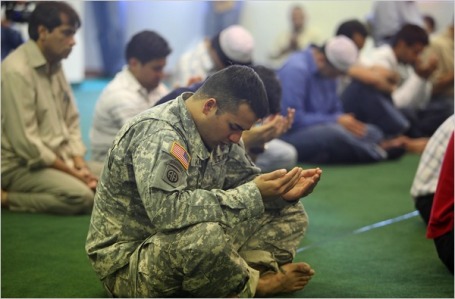
Islamophobia on the Rise in America


Despite many Muslims activists speaking out and taking action against the strong Muslim hatred that has spawned in America since September 11, 2001- studies are showing that negative perceptions towards Muslim Americans are on the rise. Read one woman's take, Jehanzeb, on the struggle for the Muslim community in America to regain it's positive image and overcome their common association with 'terrorists'.

The Candid Camera of Racism


Racism Review: The ABC News Show 20/20 commonly features a segment called "What Would You Do" which depicts surveillance video of average Americans and their decisions in ethical situations. This video clip shows the different way Black and White adolescents are treated.

What you find may shock you. Check it out and check out Jessie's insights on the matter at RacismReview.com

Darius Rucker Wins a Country Music Award


RaceWire: This year, a black man, Darius Rucker took home a CMA for best new artist. Juba Kalamka, a guest blogger on RaceWire.com discusses what this means for the country music community:

Rucker himself seems reticent (and, I suspect, at this point in his career, a bit tired) to be the de facto Representative of the Race for country music, having experienced similar dynamics during the mega-success of his former band. Though one might expect that the comments at AOL’s country music news site, TheBoot.com, would be of the stereotypic Southern-fried racist variety, the bulk of them are congratulatory and mostly insightful, with one Black and several white commentators giving minute histories of Black influence in country music and several white commentators acknowledging the immensity of his crossover success in a genre not particularly friendly to Black folks or 45-year-old newbies, let alone its veteran hit makers.

Head over to ColorLines.com to read more of his insights!

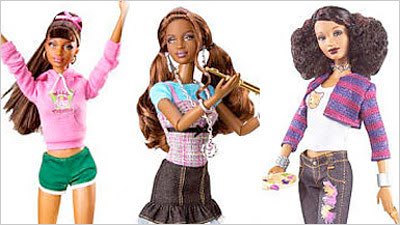
Mattel Introduces New Line of Black Barbies


Racialicious: Mattel announced that it would soon be releasing its latest line of African-American Barbie Dolls in a line they call So in Style or S.I.S. The dolls will feature "more authentic-looking facial features such as fuller lips, a wider nose, more distinctive cheek bones and curlier hair".